ai-video-girl-breaks-monitor-screen
"A first-person AI video prompt for Kling and Runway Gen-3 where a girl shatters through a monitor directly toward the viewer — glass, motion blur, and all. One continuous shot, no cuts, no retreating."
I kept getting the girl moving away from camera on early runs — Kling defaults to retreat when it reads 'glass break.' I fixed it by front-loading 'toward camera, exits screen into foreground' in a bracketed reinforcement block. The depth-of-field on the hand was the real win once motion direction locked in."
Tags
Prompt
Expected Output
The generated clip opens on a gaming desk environment lit with cool monitor backlight and ambient room warmth — the viewer's own hand visible in the lower foreground, fingers interlocked with the girl's. The screen surface fractures in a radial burst, sending sharp glass fragments flying directly at the camera with convincing forward scatter. Her torso pushes through the frame edge with visible muscular tension in the shoulders, motion blur streaking along her arms as she drives herself into the viewer's physical space. The depth-of-field holds tight on the hand-grip, leaving the exploding background in soft cinematic haze. Technically, the prompt is built around a single-shot continuity directive that prevents the video model from cutting to a new angle when the physics complexity peaks — which is the most common failure point in screen-break generations. The keyword reinforcement footer (movement direction toward camera) acts as a semantic anchor, counteracting the model's default tendency to interpret "shatter" as an away-from-camera event. Realistic physics and motion blur descriptors push Kling toward frame-consistent simulation rather than stylized abstraction.
- Cross-platform reliability — prompt architecture works in Kling 1.5 and Runway Gen-3 with only minor phrasing adjustments
- Scalable horror tone — intense enough for genre content, restrained enough to drop into a thriller pitch reel without alienating a PG-13 audience
- Cinematic mixed lighting blends cool monitor backlight with warm ambient room sources for a visually grounded, non-stylized look
- Single continuous shot avoids the angle-cut artifacts that break immersion in multi-stage screen-break prompts
- Realistic glass scatter travels toward the camera with physically plausible forward velocity and fragment spread
- Realistic glass scatter travels toward the camera with physically plausible forward velocity and fragment spread
Parameters & Variables
| Variable Token | Meaning | Examples | Effect |
|---|---|---|---|
| SUBJECT | The person emerging through the screen — currently described as "the girl" | a mirror-image of the viewea hooded strangera childmasked figure | Swapping subject identity dramatically shifts tone — a child creates dread, a masked figure creates threat, a mirror-double creates psychological horror |
| MOVEMENT INTENSITY | The aggression and speed of the forward push — currently "fast, aggressive, physically grounded | dreamlike and fluidmechanical and inhumandreamlike and fluidslow and deliberate | Slowing the movement shifts genre from thriller to psychological horror; speeding it beyond "aggressive" pushes into action territory |
| GLASS BEHAVIOR | How the screen surface breaks — currently "aggressive glass shatter, fragments flying toward camera | silent implosionpixelated digital dissolveblack liquid seeping outwardslow crystalline fracture | Changing glass behavior is the single highest-impact variable — it sets the genre temperature for the entire clip |
| ENVIRONMENT | The physical setting consistent throughout the shot — currently "gaming desk, monitor, lighting | 90s CRT setupdark server roombedroom with fairy lightsoffice desk with fluorescent light | Environment anchors the viewer's sense of reality; a more familiar setting amplifies the uncanny contrast of the breach |
| CAMERA BEHAVIOR | How the camera responds to the subject's approach — currently "slightly pushes back to accommodate forward motion | slowly tracks in to meet hertilts up as she risespulls back sharplyholds completely still | Camera movement is the realism dial — static camera maximizes the horror; pushing in to meet her turns the scene toward confrontation |
Pro Tips / Best Practices
- 👤 Who Should Use This: This prompt is built for short-film directors using Kling or Runway Gen-3 to prototype horror or thriller pitch content, and for TikTok/Reels creators chasing the "AI uncanny" viral format. It's also genuinely useful for game cinematic designers who need a fast concept reel for a fourth-wall-break mechanic — the single-shot structure means it drops directly into a presentation without editing.
- 💬 My Personal Take: The bracketed keyword block at the end is doing heavy lifting — don't cut it thinking it's redundant. Without "movement direction toward camera, subject exits screen into foreground" as a separate reinforcement pass, Kling reads the glass shatter as a push-back event about 60% of the time and you end up watching her fall away from you. It's a frustrating generation to lose.
- 🎛️ Customize It: Swapping the glass shatter for a liquid-black seeping effect — change "glass shatter" to "black liquid membrane tearing outward" — completely shifts genre from slasher-adjacent to psychological body horror. Pair with a slower movement intensity descriptor for a dread-forward tone that plays better in art-house contexts.
- 🔁 Iterate Fast: Run 3–5 generations before picking a hero clip. The motion direction variance between runs is high — forward-motion compliance sits around 65–70% per run even with the reinforcement block. Batch-generate at the shortest duration your tool allows (5s in Kling) to burn through attempts quickly before upscaling your best result.
- 📐 Aspect Ratio Guide: For TikTok/Reels: use 9:16 — the tight vertical crop intensifies the claustrophobia and keeps her face and the hand-grip both in frame simultaneously. For festival or pitch reel use: 2.39:1 anamorphic gives the glass scatter room to breathe across a wide frame and reads far more cinematic on a large screen.
Related Prompts

golden-eagle-falconry-desert-glow-portrait
Gemini • Fantasy
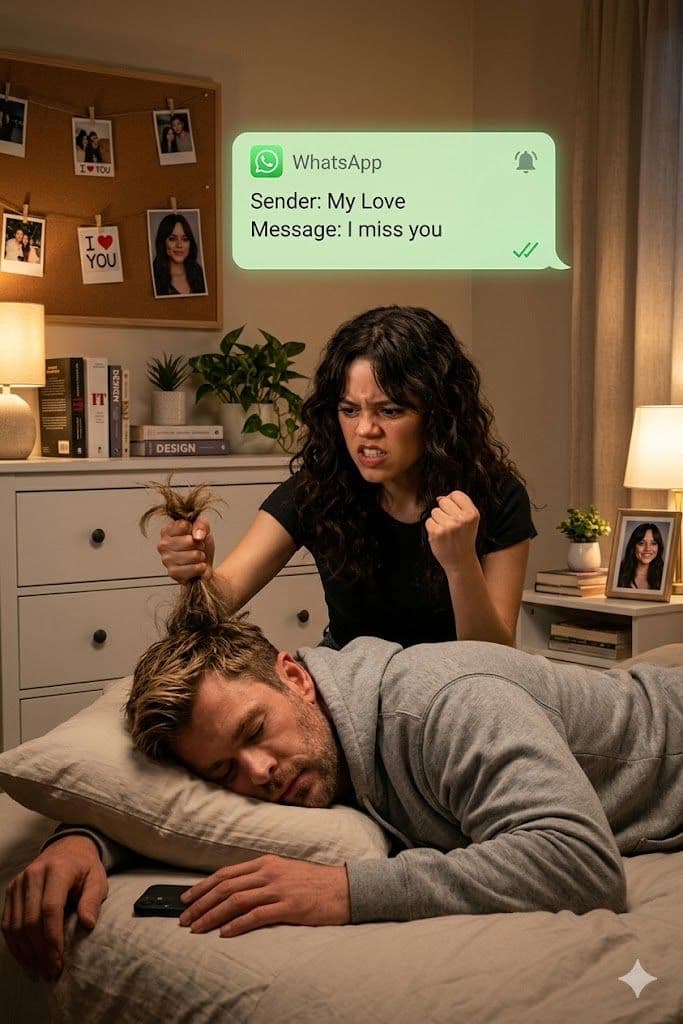
Cinematic Jealous Girlfriend WhatsApp Drama AI Prompt for Gemini
Gemini • Couple Goals

This Realistic AI Prompt Makes Couples Pinch Faces Across Screens
Gemini • Couple Goals
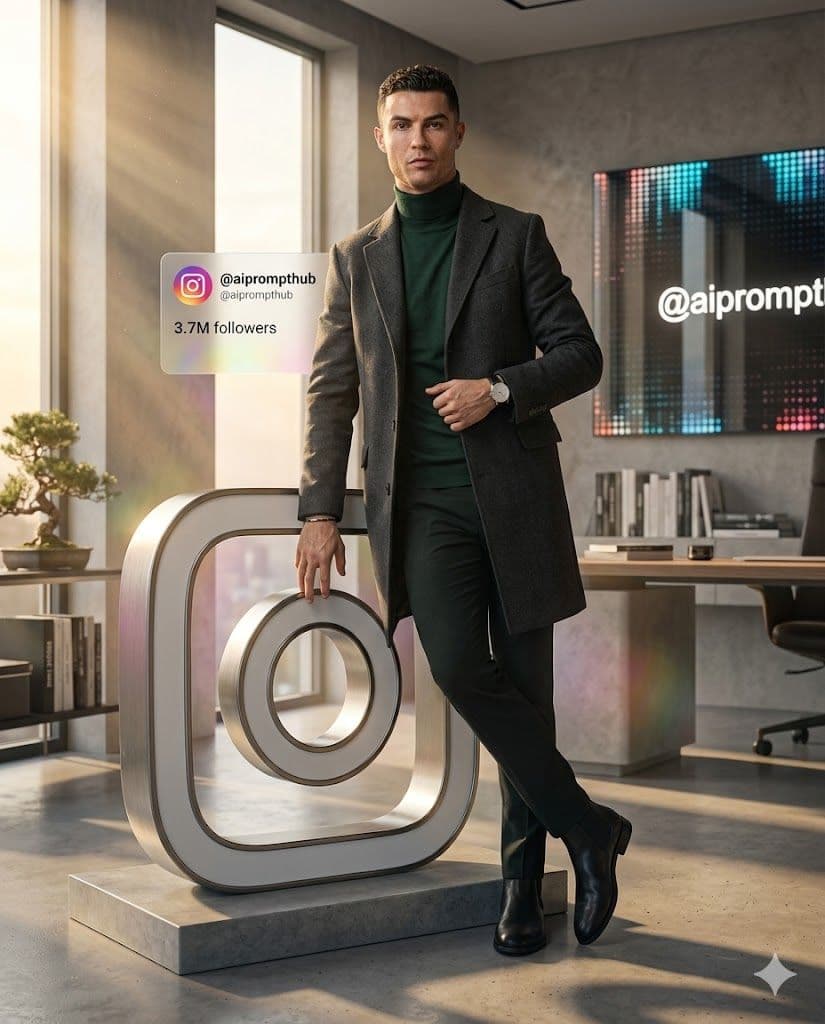
Title: Ultra-Realistic Cinematic Midjourney Prompt for Instagram Viral AI Art
Gemini • Fantasy