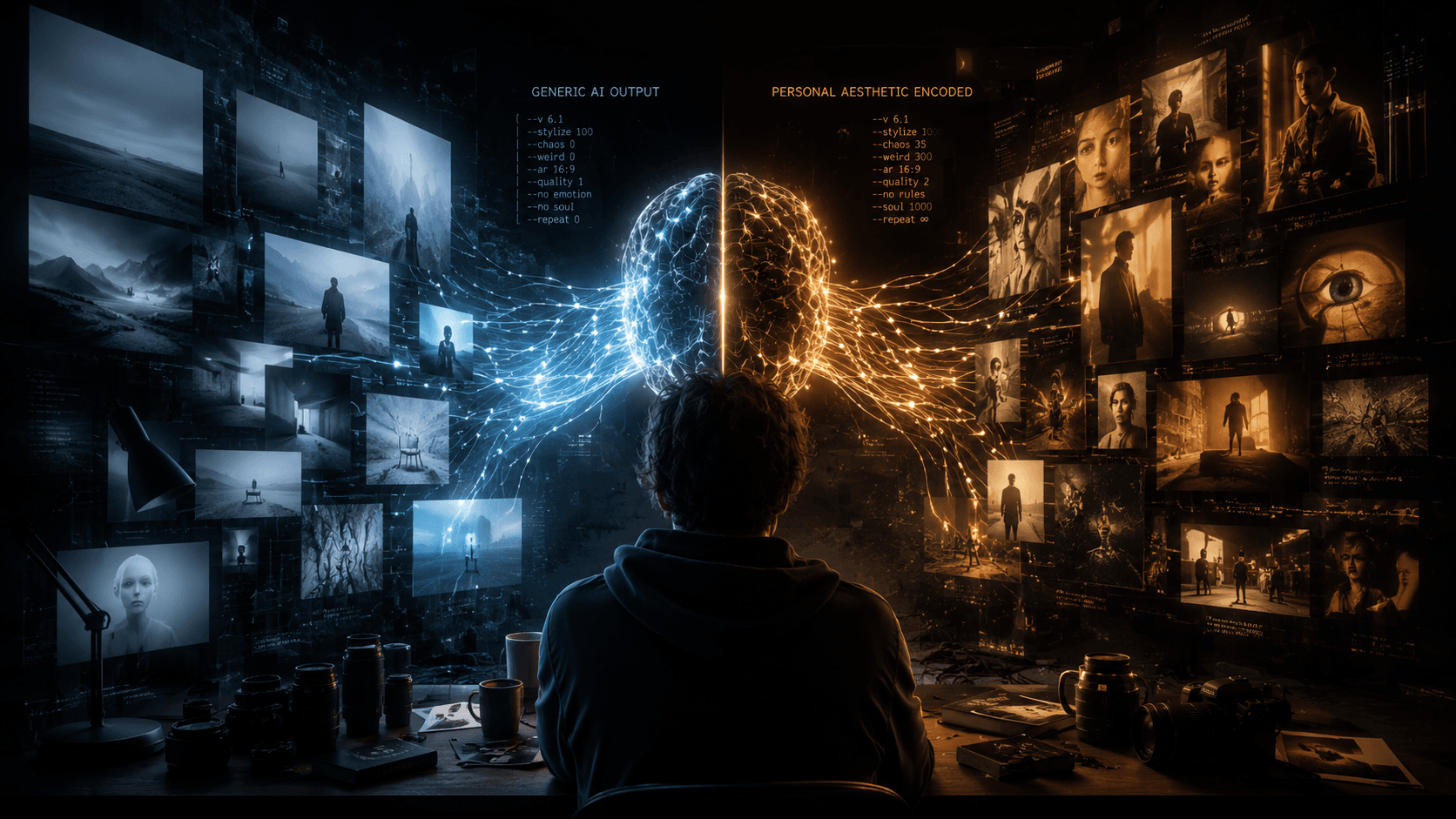
Midjourney Personalization --p Flag: Train Your Signature Style the Right Way
Midjourney's default outputs all look the same. The --p personalization flag trains the model on your aesthetic so every generation bends toward your style automatically
Guides
Explore editorial guides on prompt structure, creative direction, and workflow strategy. Each article is built to help creators produce stronger outputs with less guesswork.

Midjourney's default outputs all look the same. The --p personalization flag trains the model on your aesthetic so every generation bends toward your style automatically

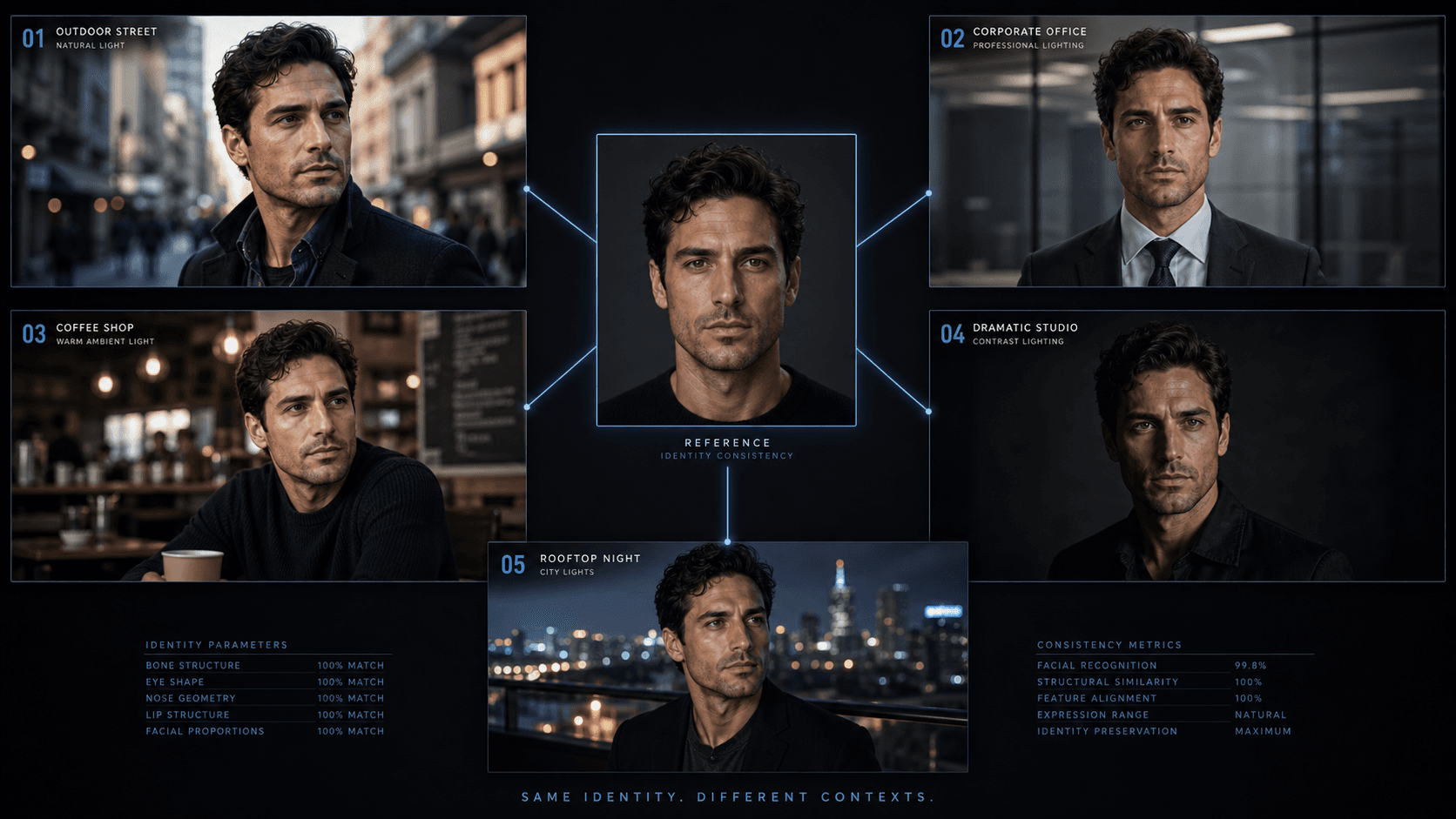
Midjourney generates a different-looking character every single time—until you learn --cref. This guide covers the exact workflow to lock identity across every pose.

Stop re-rolling bad AI generations. Get 50+ tested negative prompts organized by image type—portraits, anime, product shots, and more. Copy, paste, and get cleaner results on the first try.

AI-generated text is almost always unreadable garbage. Here's the exact hybrid workflow I use to get clean, on-brand typography into any AI image.

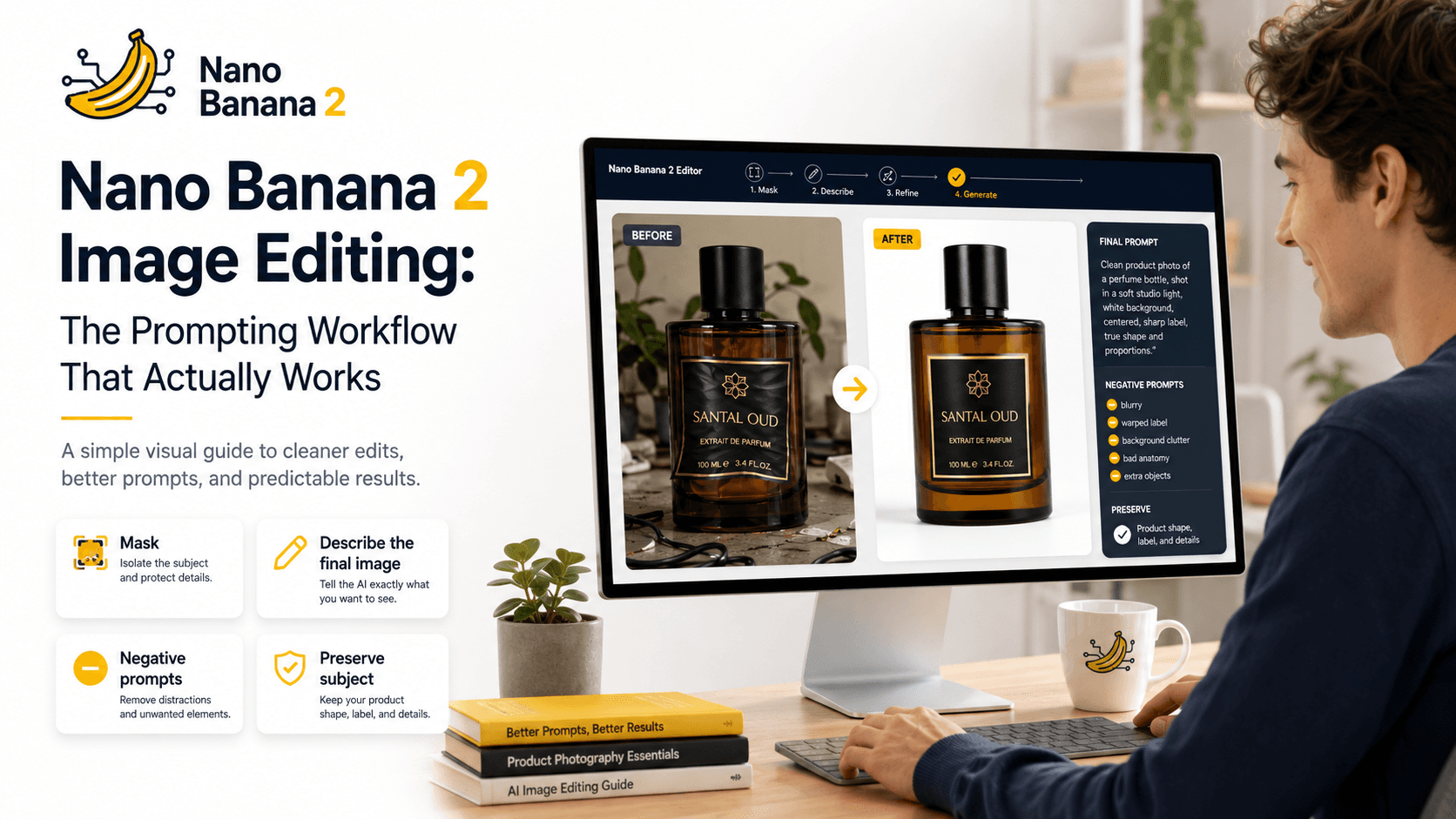
Nano Banana 2 rewrites your image instead of editing it? Your prompt structure is the problem. Here's the exact workflow I use for precise, non-destructive edits.

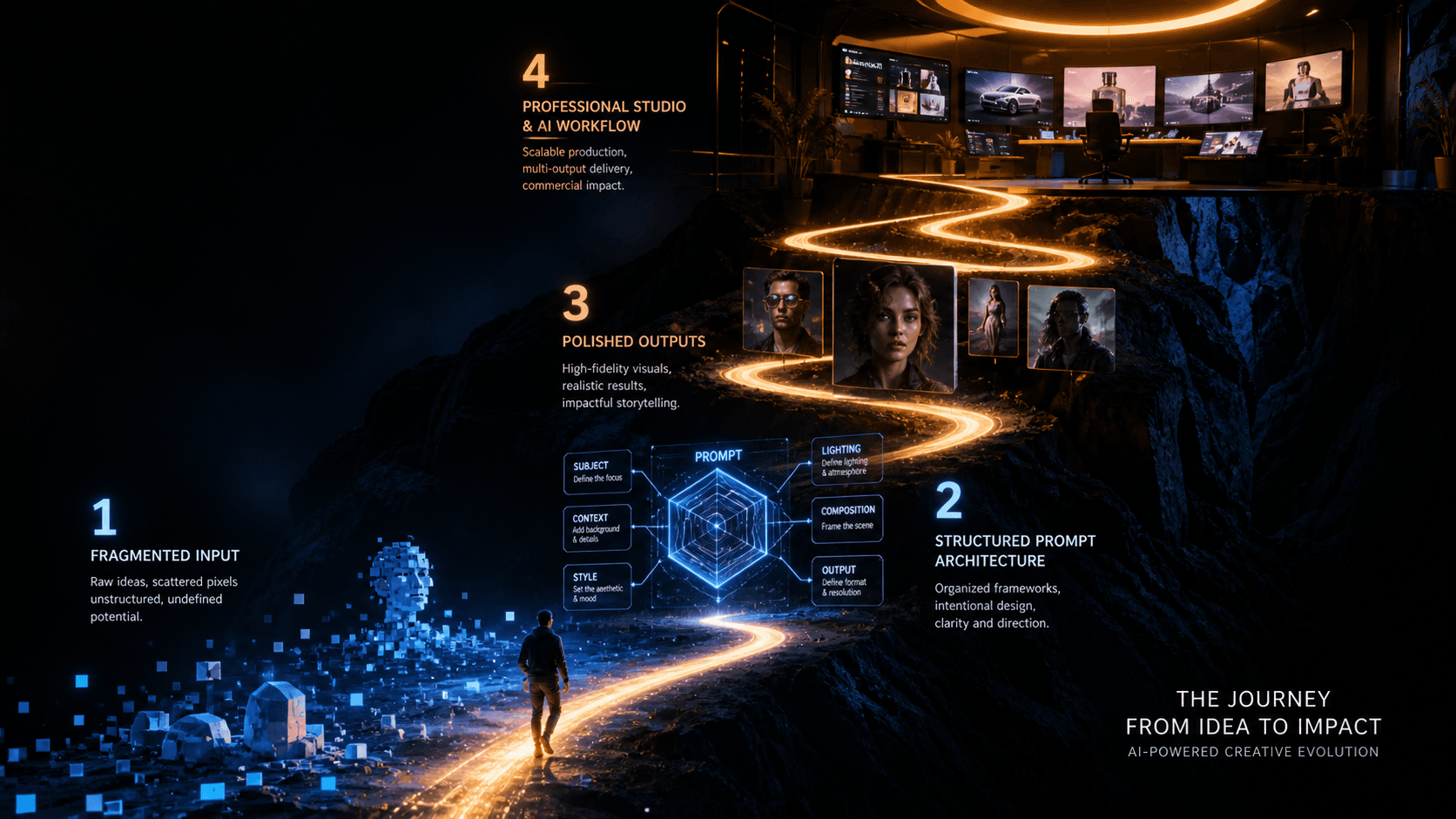
Most people learn AI prompting randomly and plateau fast. Here's the structured, four-stage path I'd follow if I was starting over — with nothing skipped and nothing wasted.

Getting the same face across multiple AI generations is harder than any tutorial admits. Here's what actually works — parameters, reference image rules, and real failure rates.

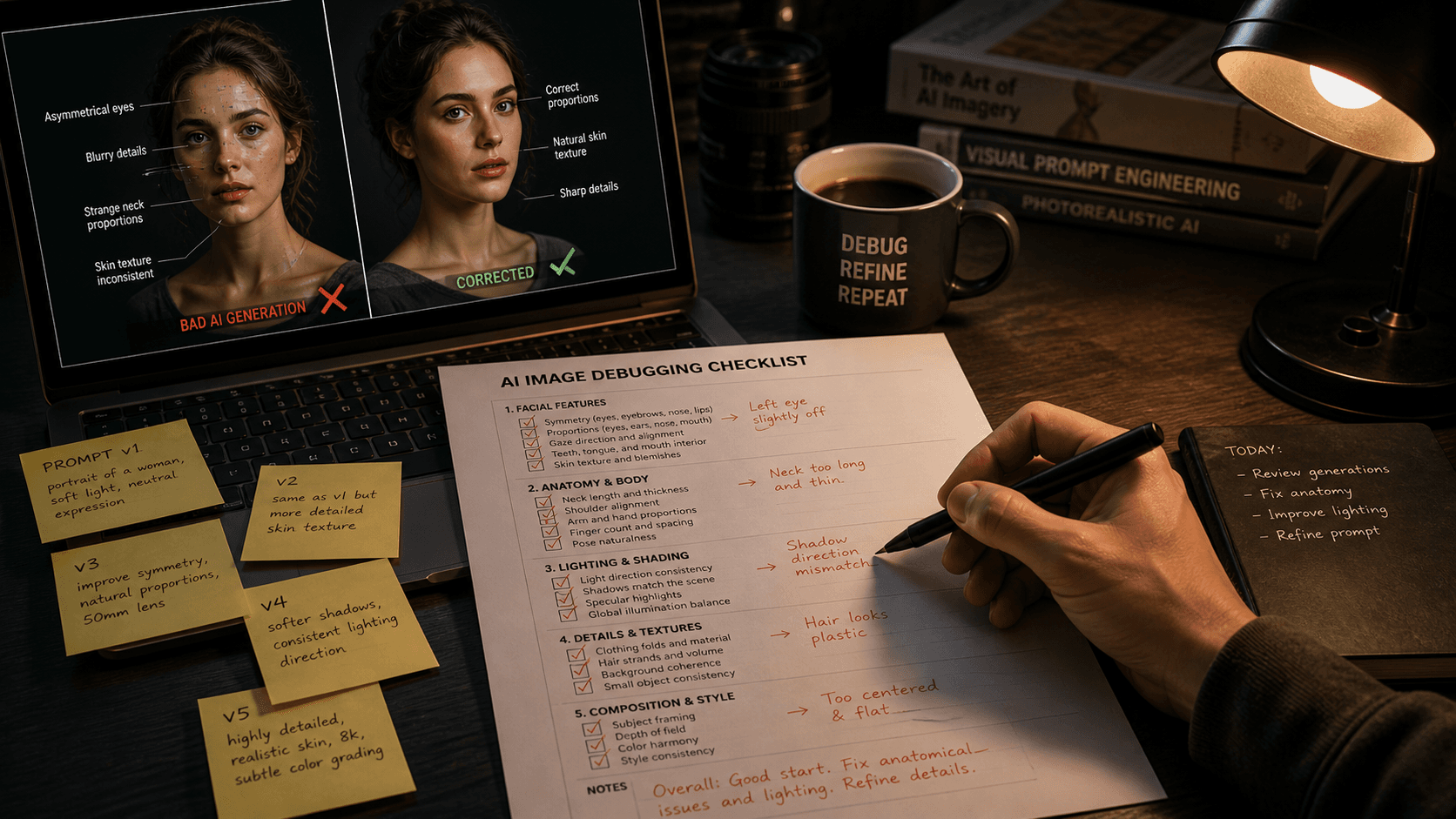
When your AI prompt breaks, changing random things wastes credits and teaches you nothing. Here's the exact diagnostic checklist I run to find the real problem fast.

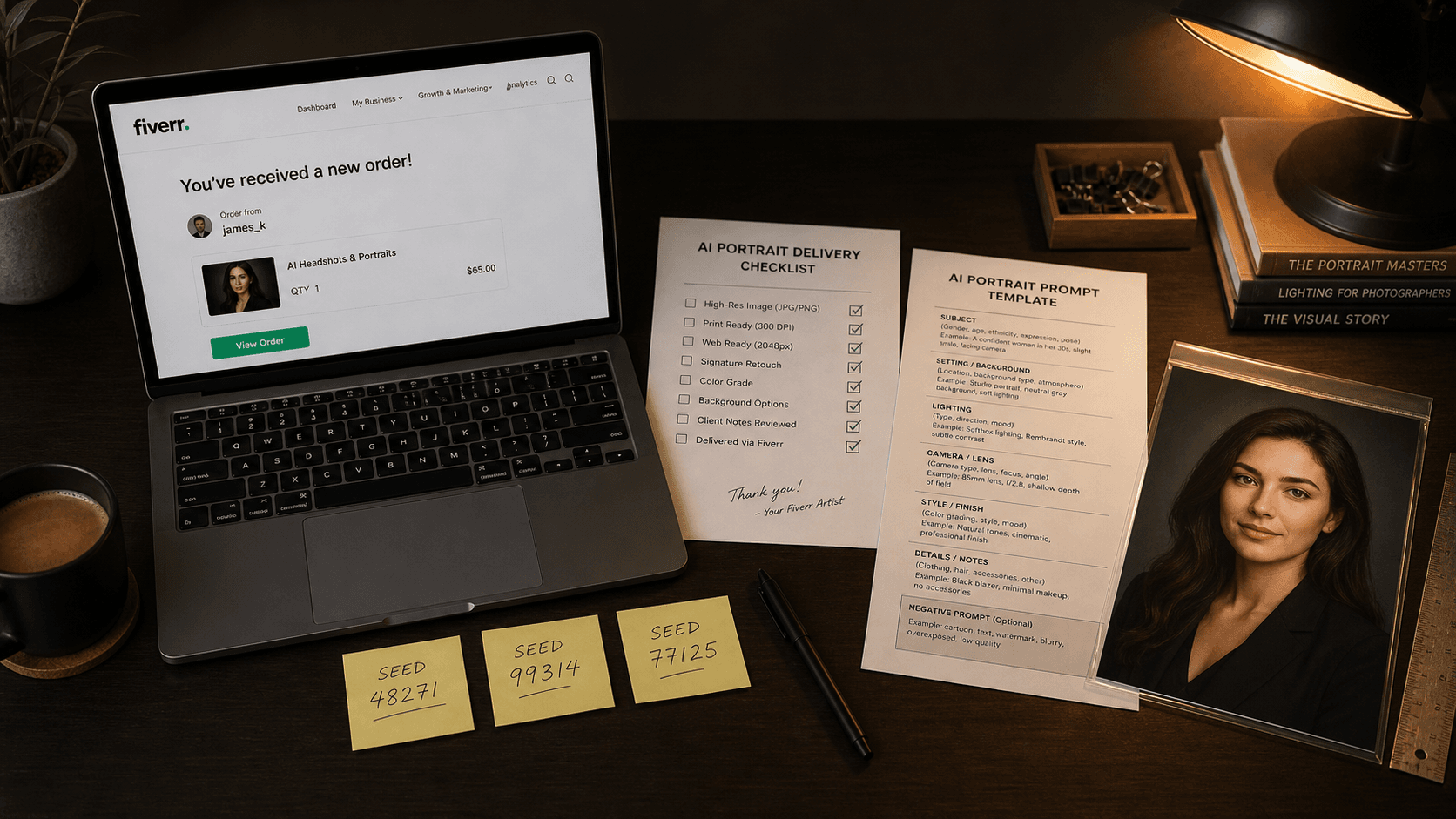
Generating impressive AI images is easy. Delivering them professionally to clients — consistently, on brief, without revision spirals — is a completely different skill. Here's my system.

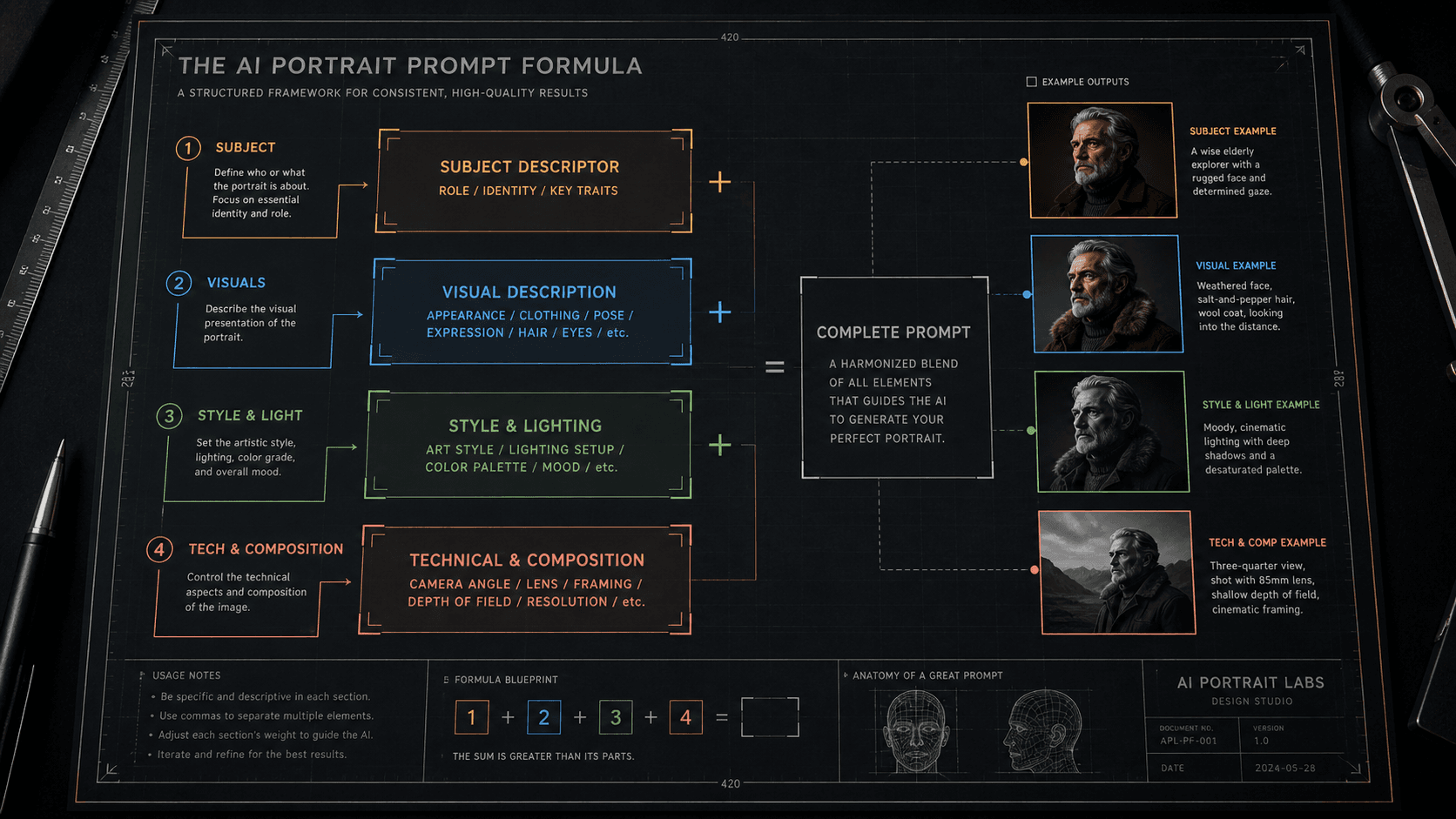
Random prompts produce random results. Here's the exact layered formula I use to write AI prompts that generate predictable, repeatable outputs every session.

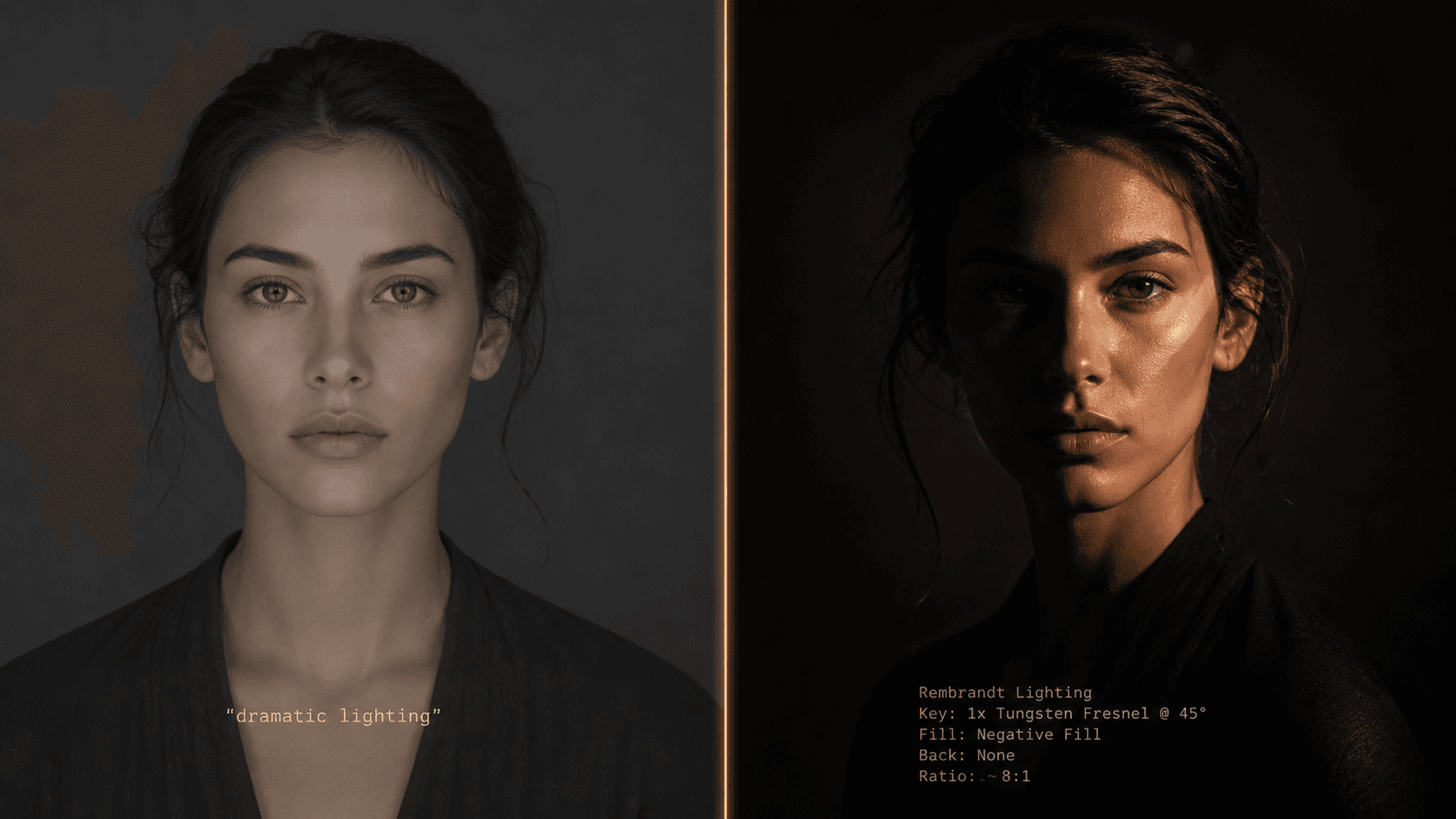
Writing "dramatic lighting" gets you nothing reliable. Lighting in AI prompts is a physics problem, not an adjective problem. Here's the framework I use for precise control.

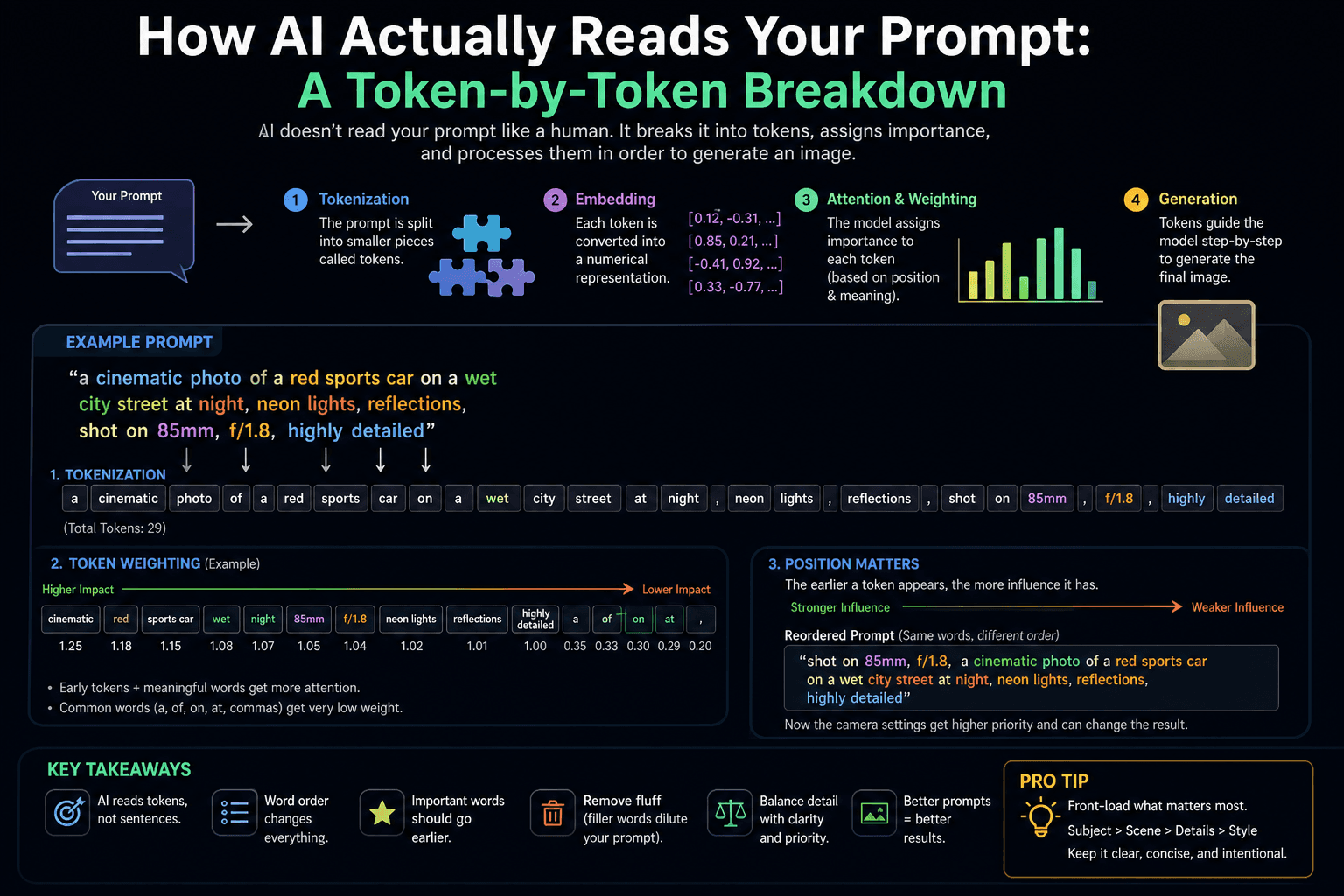
Midjourney doesn't read your prompt like a sentence — it processes weighted tokens with positional bias. Here's exactly what that means for your outputs.

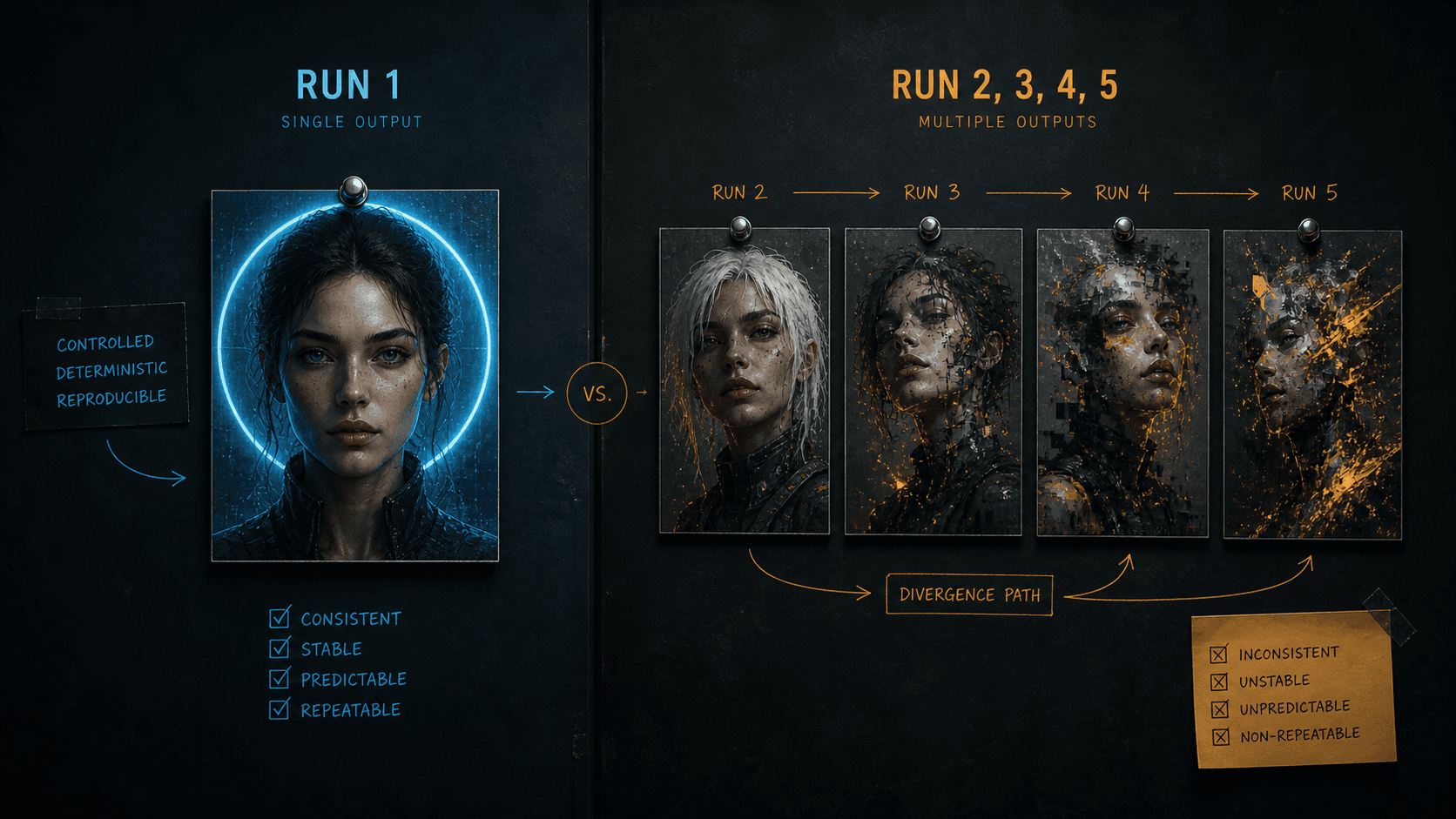
Your prompt nailed it once, then never again. This isn't random — seed, chaos, and variation parameters control it. Here's exactly how each one works.

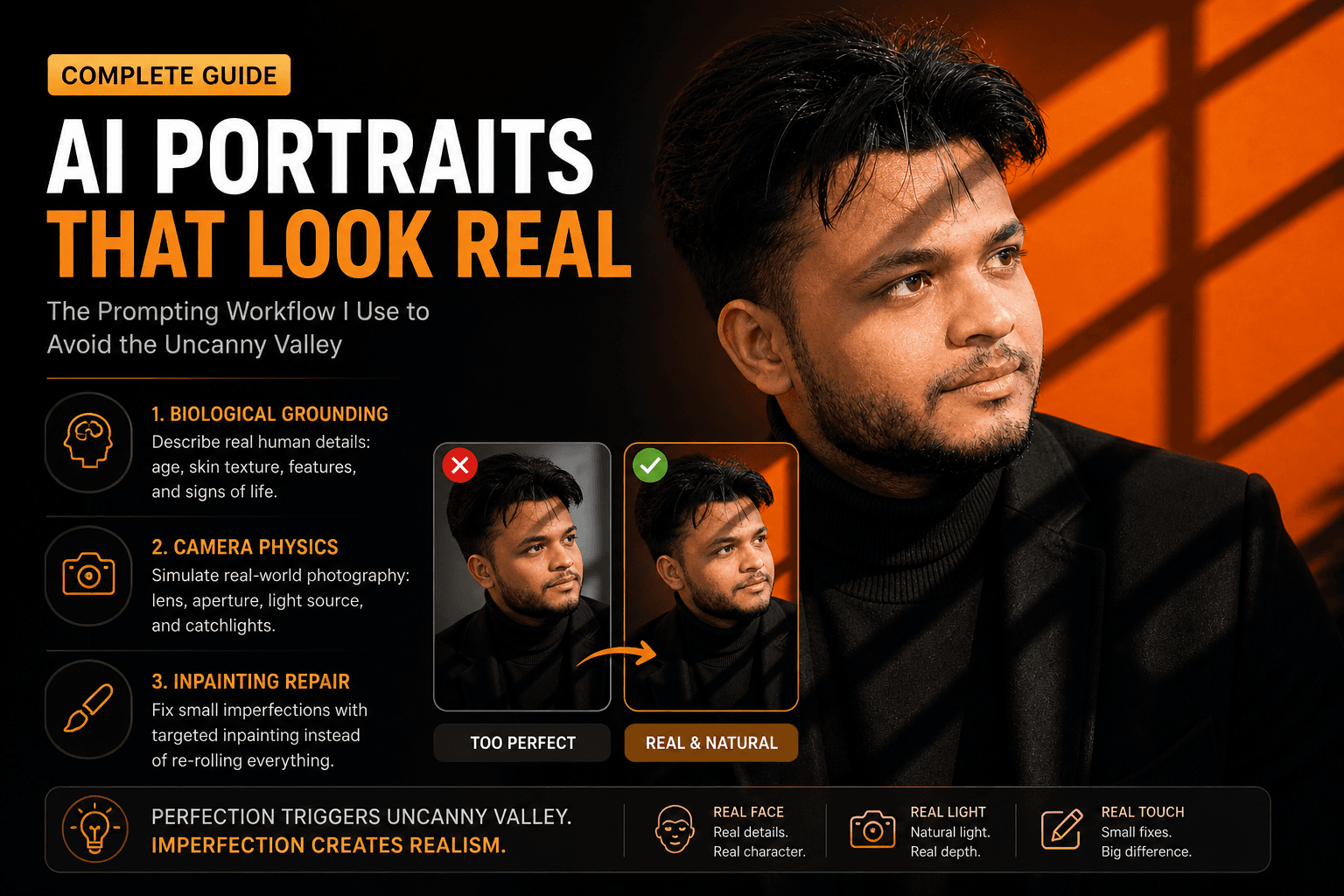
Plastic skin, dead eyes, and subtle wrongness — AI faces fail for a mechanical reason. Here's the exact prompt and workflow fix I use for client-ready portraits.

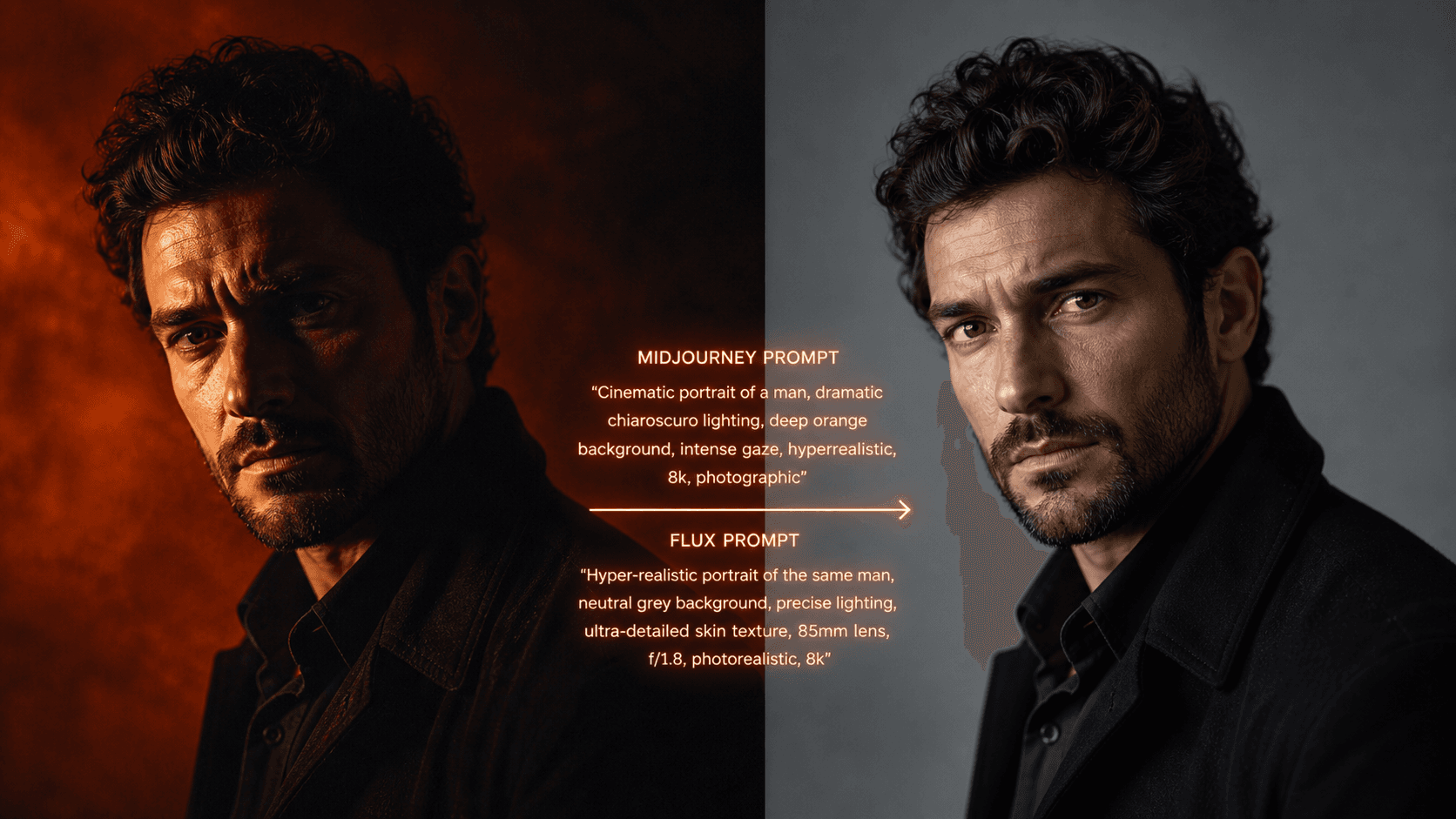
Midjourney and Flux process prompts in fundamentally different ways. Here's the exact rewriting framework I use to make one prompt work brilliantly on both models.

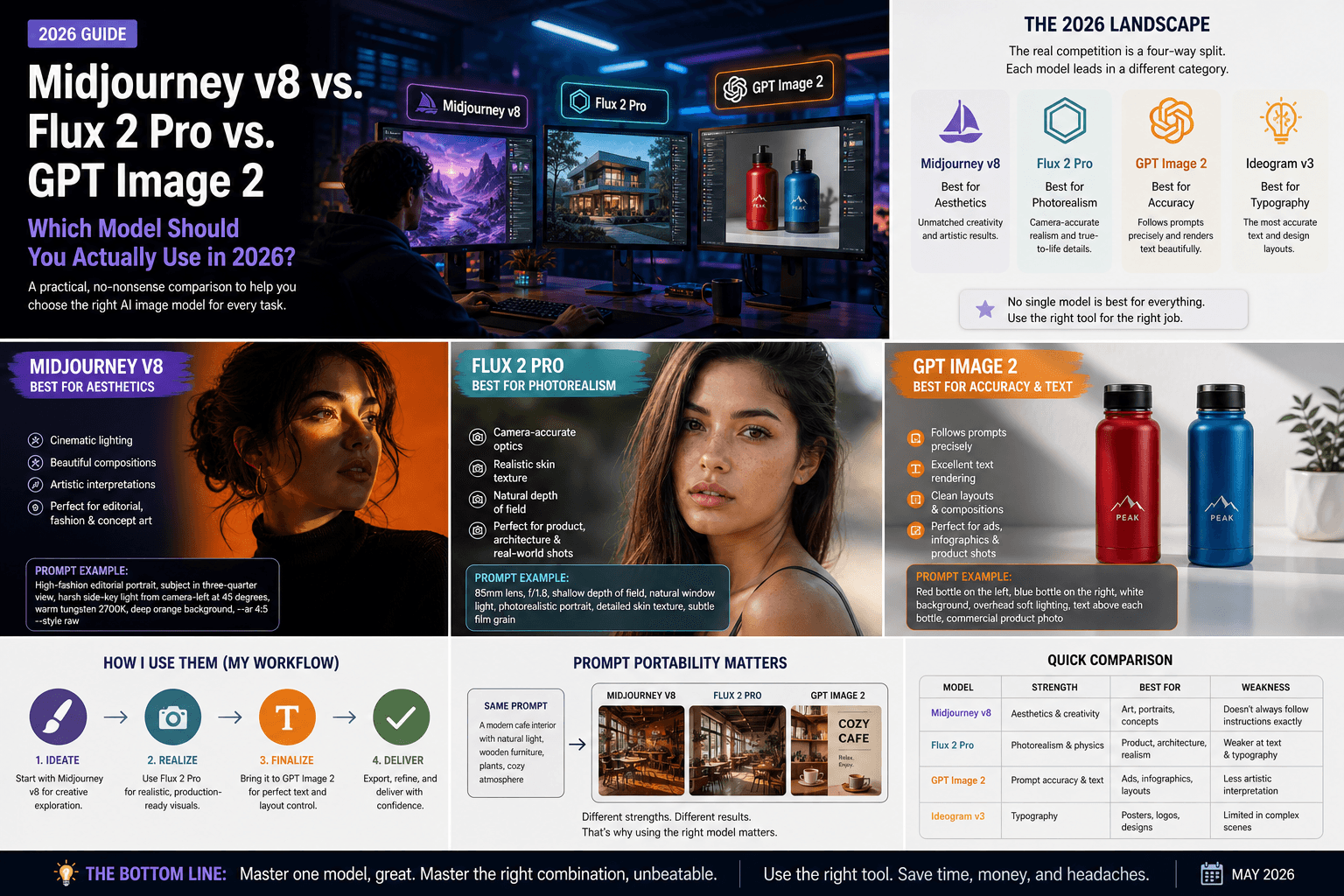
No single AI model is “best” in 2026—each excels in different tasks. This guide shows when to use Midjourney v8, Flux 2 Pro, or GPT Image 2 based on your workflow needs.

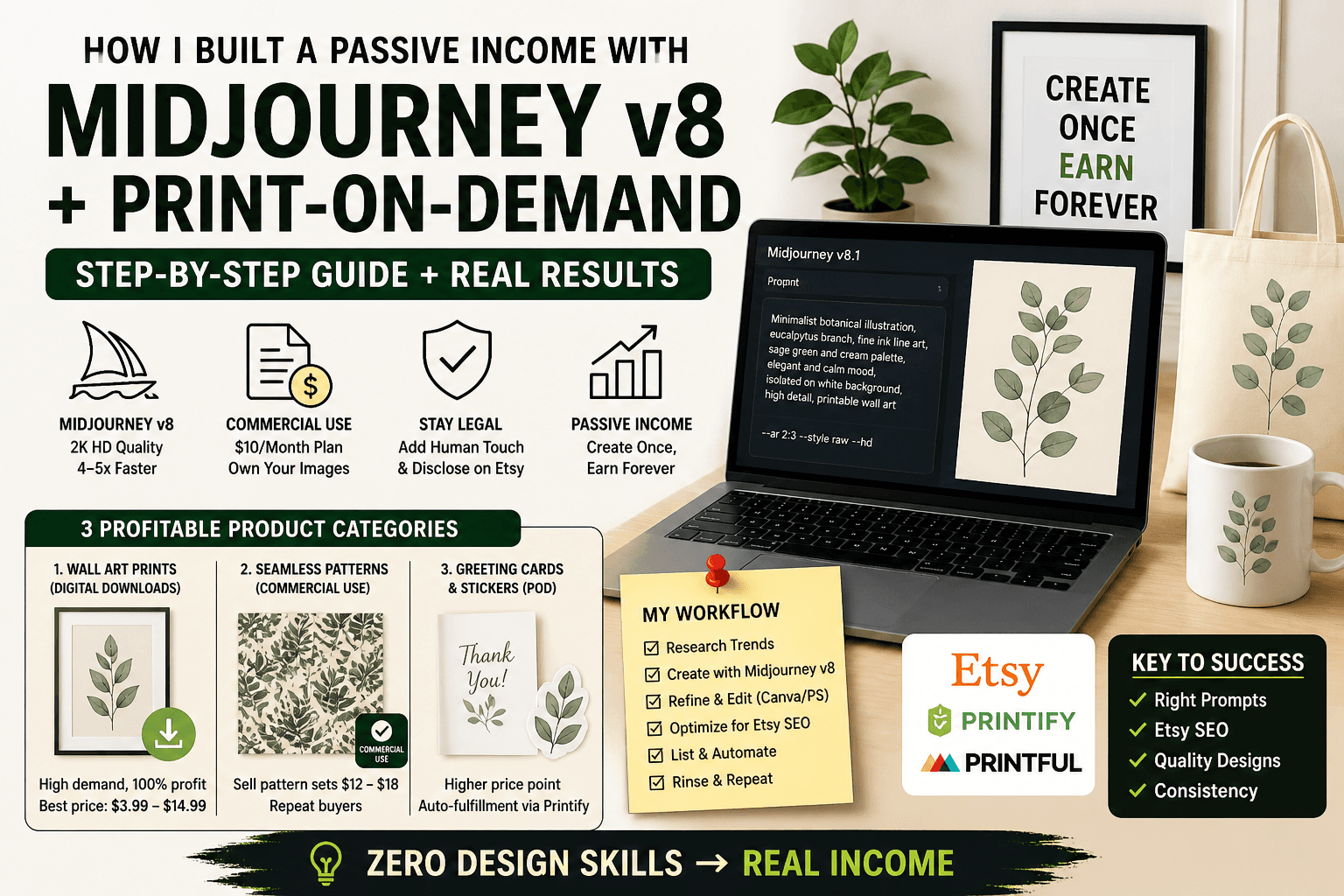
A step-by-step guide to building a passive income Etsy shop using Midjourney v8.1 — covering prompts, product selection, licensing, and Etsy SEO. No design degree required.