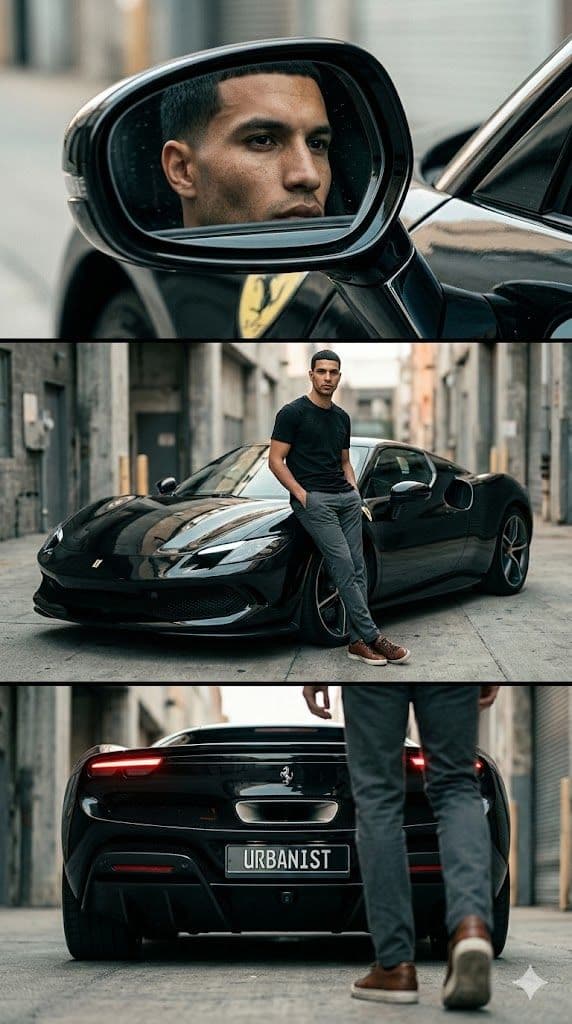
cinematic-triptych-car-portrait-ai-prompt
A cinematic triptych AI prompt built for automotive lifestyle editorial work — three meticulously composed frames capturing subject identity, environmental drama, and car design as one cohesive shoot narrative
Tags
Prompt
Expected Output
The prompt generates three vertically stacked cinematic frames: a sharp mirror-reflection close-up with visible road grime and micro-scratch texture across the housing, a low-angle full-body portrait of the subject against a matte-black muscle car in a brutalist concrete alleyway, and a dramatic rear perspective where glowing LED taillights dissolve into deeply crushed cinematic shadows. Chiaroscuro lighting defines every frame — cool natural overhead light filtered through the urban canyon creates crisp neutral highlights and deep teal-toned shadow pools with strong compositional contrast. Technically, the output exhibits 8K hyperrealistic rendering with visible micro-textures including skin pores, peach fuzz, paint-surface reflections, and obsidian gloss detail. This cinematic AI portrait prompt applies desaturated industrial tones with high-contrast "crushed" blacks, HDR shadow detail retention, and teal-charcoal color grading — simulating 85mm shallow-focus optics for portrait frames and 35mm edge-to-edge sharpness for the automotive wide shot. Subtle 35mm film grain pushes the aesthetic squarely into professional automotive photography territory.
- Mirror-reflection close-up delivers sharp facial clarity with micro-scratched housing texture and road grime realism
- Chiaroscuro overhead lighting sculpts each frame with cool crisp highlights and deep cinematic teal shadow pools
- Face-consistent subject integration maintains anatomical identity and bone structure across all three distinct compositions
- Crushed blacks with preserved shadow detail produce editorial-grade automotive contrast throughout the entire triptych
- Simulated 85mm and 35mm optic logic controls depth of field and geometric distortion on a per-frame basis
- 35mm film grain and HDR layering eliminate the sterile flatness common in unrefined AI portrait outputs
- Industrial brutalist concrete and obsidian paint reflections build a cohesive environmental narrative across all three frames
Parameters & Variables
| Variable Token | Meaning | Examples | Effect |
|---|---|---|---|
| Reference Subject | The individual whose facial identity, bone structure, and proportions must be preserved across all three frames | professional athletebrand ambassadormale model reference photo | Swapping this fundamentally changes the identity anchor of the triptych, altering posture dynamic, skin tone rendering, and clothing compatibility across all frames. |
| Car Model / Vehicle Type | The specific vehicle featured in the middle and bottom frames, defining silhouette, taillight design, and wide-body character | obsidian Audi RS7, midnight Chevy Camaro ZL1gunmetal Ford Mustang GT500matte-black Dodge Charger | Changing the vehicle shifts the taillight LED signature, side-profile geometry, paint reflection quality, and the aggressive stance visible in the rear frame. |
| Color Grade Style | The post-processing palette and tonal language applied across all three frames | neon-accented cyberpunkcold high-key silverwarm golden hour amberteal-and-charcoal cinematic | Altering the grade shifts the entire emotional register from cold industrial luxury to warm approachability or stylized genre aesthetics. |
| Setting / Urban Environment | The architectural backdrop defining ambient light sources, leading lines, and surface reflection material | brutalist concrete alleywayrooftop parking structurefog-lit highway overpassrain-soaked downtown side street | Replacing the environment changes the available ambient bounce light, the architectural reflection pattern on the car's paint, and the convergence angle of leading lines in the bottom frame. |
| Lens / Optic Simulation | The focal length and optical characteristic assigned to each frame | 24mm dramatic wide-angle35mm minimal distortion50mm neutral standard85mm f/1.4 creamy bokeh | Adjusting the lens simulation alters subject compression, edge sharpness, background separation quality, and the perceived sense of depth and spatial drama per frame. |
Pro Tips / Best Practices
- 🎛️ Customize It: Replace [Reference Subject] with a dense physical description (jawline shape, skin tone, eye set, hair texture) if generating in DALL-E 3 or Midjourney without a reference image. For maximum identity fidelity, supply a front-facing reference photo via IP-Adapter in a ComfyUI pipeline — this is the workflow this prompt was architecturally designed for.
- 🔁 Iterate Fast: Rather than attempting a single generation of the full triptych, produce each frame independently at its native aspect ratio (portrait close-up, 3:4 environmental, 16:9 rear wide). Lock lighting and color grade per frame first, then composite vertically in Photoshop or Affinity Photo. This eliminates inconsistency artifacts from multi-composition single-shot attempts.
- 🎨 Style Pairing: Introduce a subtle warm amber accent specifically on the LED taillight signature in the bottom frame to create complementary contrast against the teal-charcoal dominant grade. This single color counterpoint pushes the output into luxury automotive advertising territory without breaking the overall tonal system.
- 📐 Aspect Ratio Guide: n Midjourney, use --ar 3:10 if generating the full stacked triptych in one pass, or --ar 9:16 per frame for individual shots. In Stable Diffusion SDXL, a portrait canvas of 768×1280 per frame yields the sharpest micro-texture resolution at the prompt's specified 8K optic parameters.
- 💡 Workflow Tip: The three-frame vertical format is purpose-built for high-performing Pinterest pins and Instagram carousel posts. Export each frame individually before posting the full stacked editorial — single-frame A/B testing consistently outperforms composite posts in save-rate diagnostics for automotive and lifestyle content categories.
Related Prompts
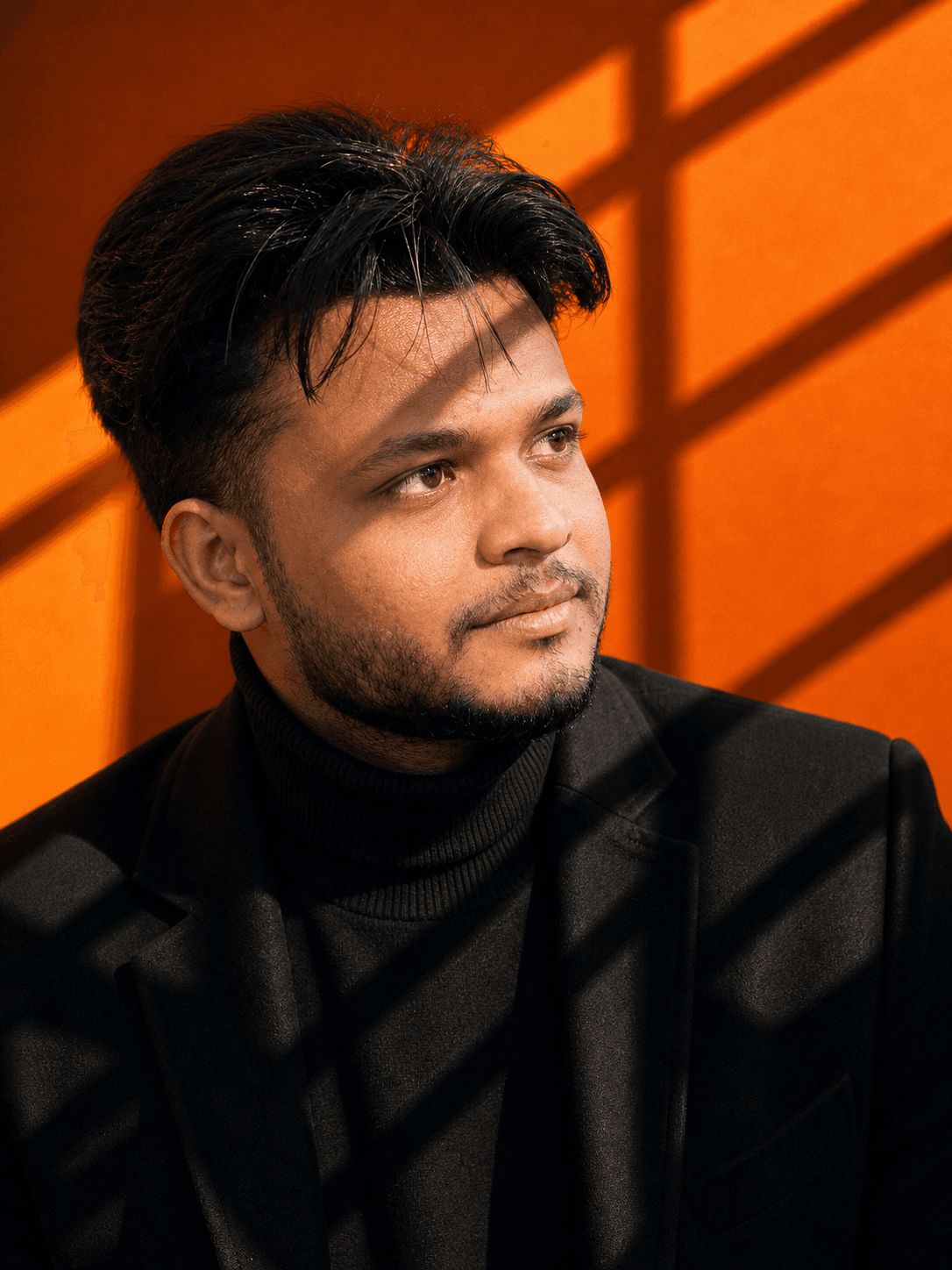
High Fashion AI Portrait Prompt with Geometric Shadow Lighting
Nano Banana • Fashion
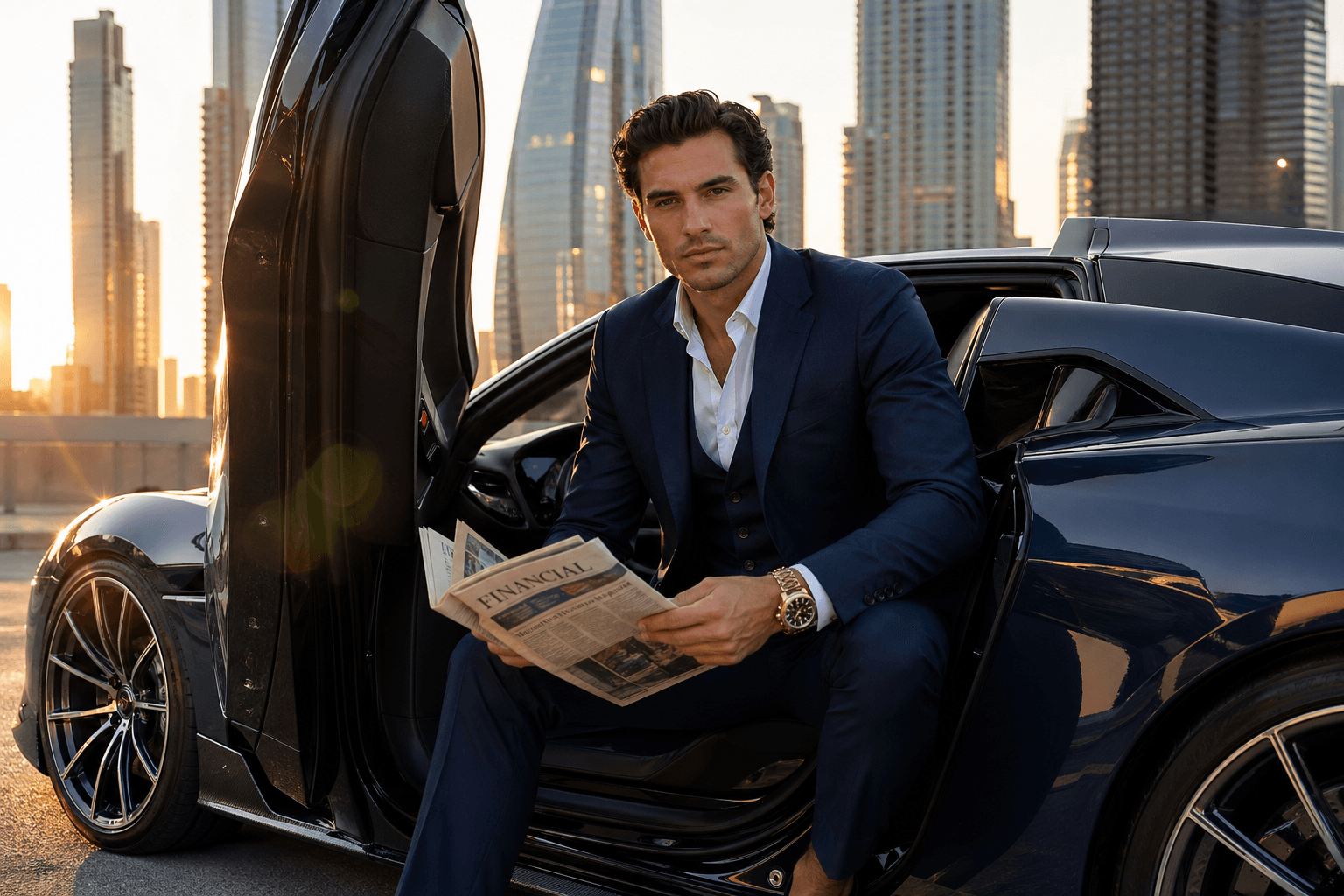
AI Prompt for Executive Identity Portrait: Navy Suit, Scissor-Door Supercar, Cityscape Background
Nano Banana • Photography
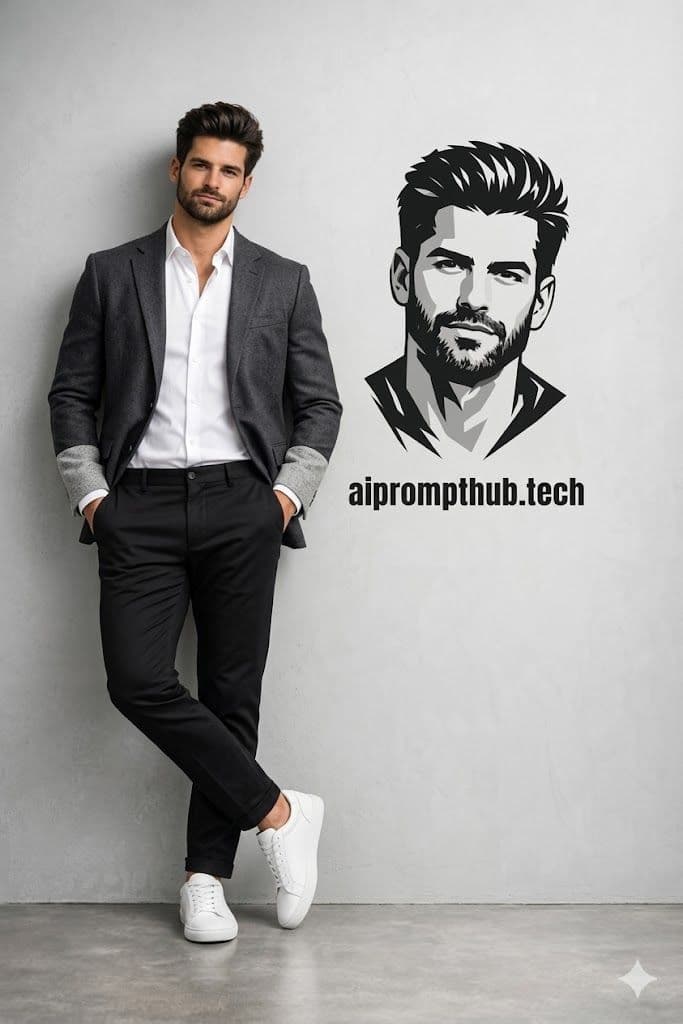
Realistic Cinematic Portrait AI Prompt for Professional Modern Fashion Photography
Nano Banana • Photography
Photorealistic Duality Horror AI Prompt for Dark Fantasy Game Concept Art
Nano Banana • Dark / Moody